
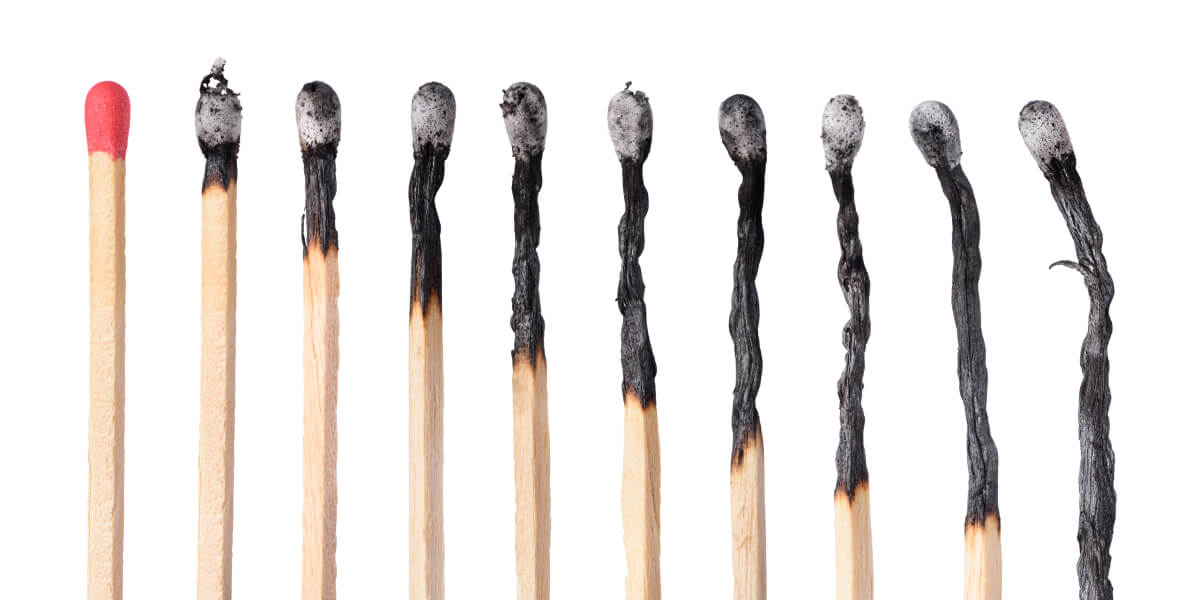
Burnout happens when chronic work stress hasn’t been successfully managed over time. It’s not just feeling tired after a long day or a busy week.
Burnout is a specific condition where you experience three things together: complete emotional and physical exhaustion, feeling distant about your work, and a reduced sense of accomplishment.
The World Health Organization officially recognizes burnout as an occupational phenomenon that results from chronic workplace stress.
What makes burnout different from regular stress is that it builds up gradually and doesn’t go away with a good night’s sleep or even a vacation.
In this newsletter, we’re exploring recent research about what causes burnout and what actually prevents it.
The 2-5 Hour Rule: How Much Free Time You Actually Need

A 2021 study published in the Journal of Personality and Social Psychology analyzed data from 35,000 Americans to answer a critical question: how much free time do we need each day for good mental health?
The researchers from University of Pennsylvania and UCLA tracked how people spent their time and measured their overall well-being.
People who had less than 2 hours of discretionary time per day reported higher stress and lower well-being. As free time increased, well-being improved but only up to a point. Well-being peaked when people had around 2-5 hours of free time daily.
But here’s what surprised researchers: having more than 5 hours of discretionary time was associated with declining well-being because excessive unstructured time reduced feelings of purpose.
The study also found that what people did with their free time mattered.
People who spent discretionary hours on productive activities (like exercise or hobbies) or social activities felt better than those who spent hours on passive activities like watching TV.
Why is This Important?
This research identifies a specific threshold for burnout prevention. Less than 2 hours of daily free time creates the conditions for chronic stress and burnout to develop.
“Discretionary time” means time that’s genuinely yours (not chores, not errands, not work obligations). It’s time spent on activities that restore and engage you.
For working adults, this means burnout prevention isn’t about taking long vacations or making drastic career changes.
It’s about protecting 2-5 hours in your daily routine for genuinely restorative activities … every single day, not just weekends.
Read Study Here
Workplace Burnout Has Reached Crisis Levels in Canada
Recent research from Robert Half reveals that 47% of Canadian workers report feeling burned out, with 31% indicating they are more burned out now than they were a year ago. This marks a significant increase from 42% in 2024 and 33% in 2023.
The survey of 1,500 professionals across Canada identified heavy workloads and long hours as the primary driver, cited by 39% of workers, followed by mental fatigue from high-stress tasks at 38%.
Other key findings from Canadian workplace research:
- Legal and HR professionals report the highest burnout rates at 59%
- Working parents experience burnout at 51%
- Millennials report 50% burnout rates
- 69% of Canadian employees have experienced symptoms that can develop into burnout
- Healthcare workers continue to have elevated burnout rates at 38%, significantly above the national average
Additional research from Telus Health found that70% of Canadian employees say their productivity has declined due to worsening mental health, with 40% living with constant stress.
Why is This Important?
These statistics demonstrate that burnout is a systemic workplace issue affecting nearly half of Canadian workers. The steady increase from 33% in 2023 to 47% in 2025 shows the problem is escalating, not improving.
The data on specific professions reveals that some fields face higher risk. If you work in legal, HR, healthcare, or are a working parent, your burnout risk is significantly elevated.
This research connects directly to the first study about daily free time. Most people experiencing burnout aren’t getting anywhere close to 2 hours of discretionary time per day. The combination of heavy workloads, long hours, and mental fatigue leaves minimal time for genuine rest and recovery.
Read the Report Here
Learn More About Burnout
Is it Burnout or Exhaustion? How To Tell The Difference

Exhaustion responds to rest (a good weekend can help you recover).
Burnout persists even after time off and requires deeper intervention.
This article provides specific questions to help you identify which one you’re experiencing.
How Burnout Physically Changes the Brain

Burnout creates measurable changes in brain structure.
This article explains the neuroscience of burnout and how these changes can be reversed with proper treatment.
Burnout vs. Depression: Exploring the Difference

Burnout and depression share many symptoms, which is why they’re frequently confused.
This article outlines the key diagnostic differences and explains how untreated burnout can increase depression risk.
How to Protect Yourself from Burnout
Identify your burnout triggers, not just symptoms: Most advice tells you to watch for warning signs. We take it further: work backwards to identify what specifically triggers your stress response. Is it certain types of emails? Specific meetings? Particular colleagues? Understanding your unique triggers allows you to develop personalized coping strategies rather than generic stress management.
Examine your internal narratives: Burnout often stems from beliefs like “I have to prove myself,” “I can’t say no or I’ll be seen as weak,” or “My worth is tied to my productivity.” In therapy, we help clients identify these underlying narratives that fuel overwork. What story are you telling yourself about what it means to set boundaries?
Distinguish between helpful and unhelpful guilt: When you set boundaries, guilt often follows. But there’s a difference between guilt that signals you’ve violated your values (helpful) and guilt that comes from disappointing others or not meeting impossible standards (unhelpful). Learning to recognize which type you’re experiencing helps you make decisions that protect your well-being.
Address the relational components: Burnout doesn’t happen in isolation. It often involves difficult dynamics with managers, colleagues, or organizational culture. Rather than just “setting boundaries,” we help clients navigate the interpersonal complexities of actually enforcing them in real workplace relationships.
Recognize burnout as communication: At Get Reconnected, we see burnout as your nervous system’s way of telling you something isn’t working. Instead of just managing symptoms, we help you decode the message. What is your burnout trying to tell you about your needs, values, or life direction?
Work with your nervous system, not against it: Standard advice says “take breaks” and “practice self-care.” We go deeper by helping you understand how chronic stress has dysregulated your nervous system and teaching you evidence-based techniques to restore regulation. This includes understanding your window of tolerance and recognizing when you’re in fight-or-flight versus shutdown mode.
Develop self-compassion skills: Research shows self-compassion is one of the strongest protective factors against burnout. This isn’t about being soft on yourself but about treating yourself with the same understanding you’d offer a friend facing similar challenges. In therapy, we help you develop this skill through targeted exercises and reflection.
Final Thoughts
The research establishes two clear findings: you need 2-5 hours of genuinely free time every day to prevent burnout, and 82% of workers aren’t getting it.
Burnout prevention requires protecting daily recovery time with the same commitment you apply to work obligations. This isn’t about working less hard during work hours BUT about creating clear boundaries that preserve time for restoration.
At Get Reconnected Psychotherapy Services, we specialize in burnout assessment and recovery. If you’re experiencing burnout symptoms, contact us for a free 15-minute consultation to discuss how we can support your recovery.